
Packaging Standards

Prepare China-Europe Shipments with Packaging That Is Ready for Receiving, Handling, and Delivery

Packaging Standards

Prepare China-Europe Shipments with Packaging That Is Ready for Receiving, Handling, and Delivery

Courier and truck delivery rules Label visibility and receiving readiness Wood packaging and fragile cargo control

Built around common operating requirements in China-Europe logistics, including label visibility, forklift readiness, wood packaging compliance, and pre-alert coordination.

WHO THIS PAGE HELPS

Designed for Teams That Need Practical Packaging Rules Before Cargo Moves

Built for actual shipping decisions before cargo leaves China, reaches the warehouse gate, or enters the Europe-bound delivery chain.

Marketplace and B2B sellers

Shippers sending regular carton cargo into Europe through shared warehousing and delivery channels.

Importers and receiving teams

Buyers who need cargo to be identifiable, acceptable, and easier to receive without rework.

Wooden crate or frame users

Teams shipping heavier, fragile, or oversized cargo that needs base structure and handling control.

Special cargo coordinators

Operations teams managing fragile goods, surcharge-prone packaging, or warehouse-sensitive shipments.

WHY PACKAGING STANDARDS MATTER

Packaging Affects Receiving Speed, Handling Safety, and Cost Exposure

In China-Europe logistics, packaging is not only about cargo protection. It also affects whether labels stay visible, whether cargo can be handled safely, whether warehouse teams can identify it quickly, and whether extra fees or receiving delays are triggered.

The most reliable shipments are the ones whose packaging method already matches the delivery channel, handling method, and receiving conditions before dispatch.

Packaging Affects Receiving Speed, Handling Safety, and Cost Exposure

Receiving speed depends on visible identification

Labels, marks, and outer-package photos help warehouses locate and process cargo faster.

Handling safety depends on structural readiness

Forklift access, base support, and top reinforcement all affect whether cargo can move safely.

Charges may depend on packaging form

Non-standard cartons, wrapped units, and non-carton formats can lead to extra fee exposure.

Special cargo needs earlier control

Fragile goods, wooden crates, and unusual shapes need clearer packing logic before dispatch.

PACKAGING BY DELIVERY METHOD

Different Delivery Channels Need Different Packaging Logic

Courier Delivery

Standard Cartons Are the Safest Default for Express and Parcel Networks

Courier delivery channels generally perform best with clean, standard cartons that keep labels readable and package shapes predictable. Non-standard cartons, wrapped units, and non-carton packaging may still move, but fee exposure or carrier restrictions become more likely.

Standard Cartons Are the Safest Default for Express and Parcel Networks
What to focus on

Standard cartons usually create the least operational friction.

Operational takeaway

Accepted without surcharge: standard carton packaging.

What to focus on

Reinforced, wrapped, strapped, or surcharge-prone cartons should be confirmed in advance.

Operational takeaway

Accepted with possible surcharge: non-standard cartons, over-wrapped cartons, banded units, or cartons with structural add-ons.

What to focus on

Some non-carton formats may be restricted depending on the carrier and route.

Operational takeaway

Higher-risk formats: wooden boxes, flight cases, drums, or unusual non-carton units in parcel networks.


Truck Delivery

Truck-Bound Cargo Needs Forklift Logic, Base Stability, and Clear Load Structure

Truck deliveries often involve heavier cargo, wooden crates, framed units, or special handling. The key issue is not appearance but whether the cargo can be lifted, supported, and moved safely during receiving and onward transport.

Truck-Bound Cargo Needs Forklift Logic, Base Stability, and Clear Load Structure
What to focus on

Base structure should leave clear forklift entry space and safe bottom clearance.

Operational takeaway

Check base support, pallet feet, or forklift entry before dispatch.

What to focus on

Wooden crates and frames should stay stable under lifting and load transfer.

Operational takeaway

Avoid bottom structures that block handling or weaken cargo stability.

What to focus on

Top reinforcement and load-bearing logic matter for large or heavy units.

Operational takeaway

Add clear handling and force-direction marks on larger wooden units.

Special Requirements

Fragile Cargo, Wood Packaging, and Receiving Coordination Need Earlier Control

Some shipments need more than a carton decision. Fragile cargo, wooden packaging, and special-shape units require material suitability, internal filling, compliant marks, and better warehouse coordination before arrival.

Fragile Cargo, Wood Packaging, and Receiving Coordination Need Earlier Control
What to focus on

Fragile goods should have stronger outer packaging and well-controlled inner filling.

Operational takeaway

Use handling marks such as up, keep dry, or fragile when the cargo requires them.

What to focus on

Wood packaging should use compliant materials and visible treatment or IPPC marks where required.

Operational takeaway

Do not rely on empty internal space inside the outer package for fragile cargo.

What to focus on

Pre-alert details and outer-package photos help receiving teams find and identify cargo quickly.

Operational takeaway

Confirm special or unusual formats before cargo reaches the warehouse gate.

LABELING AND IDENTIFICATION

Labels, Shipping Marks, and Outer-Pack Photos Are Part of Packaging Readiness

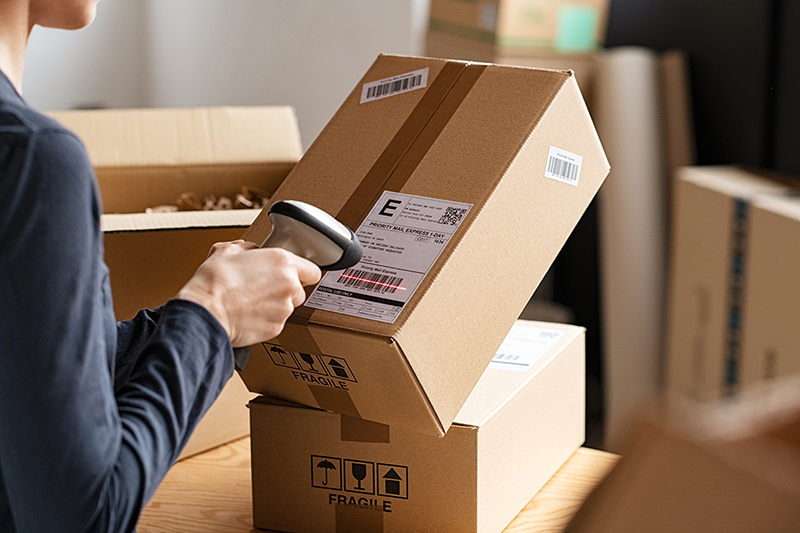
Receiving teams work faster when barcodes, references, and outer-package identifiers are already visible and consistent. If platform labels are not available in advance, a clear shipping mark still matters.

Pre-generated barcode labels are preferred whenever the route or system supports them.
Place labels on a clean, visible outer side that is not covered by other stickers or marks.
If no pre-generated label is available, use a clear shipping mark or reference that receiving teams can identify quickly.
Provide complete outer-package photos before arrival when receiving identification may depend on manual searching.
Labels, Shipping Marks, and Outer-Pack Photos Are Part of Packaging Readiness
COMMON PACKAGING SCENARIOS

Typical Packaging Setups We See in China-Europe Logistics

01

Standard carton cargo

Routine parcel and shared-warehouse cargo using clean carton packaging with visible labels and predictable shape.

02

Surcharge-prone carton setups

Cartons with heavy wrapping, strapping, corner protection, or other non-standard features that may change fee treatment.

03

Wooden crates and framed cargo

Heavier or more technical shipments that need forklift entry space, base support, and compliant wood treatment marks.

04

Fragile or unusual-shape cargo

Cargo requiring stronger outer packaging, inner filling control, handling marks, or prior confirmation before receiving.

COMMON MISTAKES

What Usually Leads to Receiving Friction, Repacking, or Extra Charges

Typical issue

Labels covered, unclear, or placed on the wrong side

Likely outcome

Receiving teams need more time to identify cargo or search manually.

Typical issue

Carton or outer packaging too weak for the cargo weight

Likely outcome

Higher risk of damage, deformation, or repacking requests before dispatch or delivery.

Typical issue

No forklift entry space or unstable wooden base structure

Likely outcome

Handling becomes unsafe, slower, or unacceptable at warehouse receiving.

Typical issue

Special packaging sent without prior confirmation

Likely outcome

Unexpected surcharge treatment, delay, or refusal depending on route and handling method.

WHAT WE CHECK BEFORE CARGO MOVES

How We Review Packaging Readiness Before Dispatch or Receiving

Our role is to spot practical packaging problems before they become warehouse friction, handling risk, or surcharge surprises. The review is less about presentation and more about operational fit.

01

Packaging type and route fit

We check whether the carton, crate, frame, or special unit suits the intended courier or truck delivery path.

02

Label and mark visibility

We review whether barcodes, references, and handling marks will remain visible through the receiving process.

03

Structure, filling, and handling stability

We look at base support, inner filling, top reinforcement, and other structural points that affect safe movement.

04

Warehouse receiving readiness

We help make sure the cargo can be identified, accepted, and coordinated with fewer avoidable questions at arrival.

PROCESS

A Simple Packaging Review Sequence Before Cargo Moves

01

Share cargo type and route

Start with the cargo profile, expected delivery method, and any unusual packaging conditions.

02

Confirm packaging and labels

Align the carton, crate, frame, or special unit with visible references and handling marks.

03

Review structure and protection

Check support, filling, reinforcement, and handling stability before dispatch.

04

Prepare warehouse receiving details

Provide outer-package photos, pre-alert references, and any receiving-sensitive information.

05

Move with clearer readiness

Cargo departs with fewer packaging questions, lower fee uncertainty, and better handling continuity.

A Simple Packaging Review Sequence Before Cargo Moves
FAQ

Frequently Asked Questions

Do all non-standard cartons automatically create extra charges?
Not always, but non-standard carton features often increase surcharge risk. The exact treatment depends on the carrier, route, and how the package shape affects handling.
Can wooden crates be used for courier delivery?
Some courier channels may restrict or surcharge wooden or non-carton packaging. Standard carton packaging is usually the safest default for parcel-style delivery networks.
What makes a wooden crate or frame forklift-ready?
A forklift-ready unit normally has sufficient bottom clearance, stable base support, and a structure that allows lifting without damaging the cargo or the packaging base.
What if labels cannot be generated before cargo is sent to the warehouse?
If pre-generated labels are not available, a clear shipping mark and complete outer-package photos become even more important for receiving identification and follow-up handling.
Are corner protectors or internal fillers necessary for every shipment?
Not for every cargo type, but they are often -necessary when the product has edge pressure risk, internal movement risk, or empty space inside the outer package. The goal is to reduce shifting, collapse, and handling damage during transit.
Can multiple product types be packed into one outer carton?
They can, but mixed packing should still keep the package stable, clearly identifiable, and easy to receive. If different SKUs, weights, or handling requirements are combined, outer labeling and internal arrangement become more important.
Why are outer-package photos useful before cargo arrives at the warehouse?
Outer-package photos help confirm carton condition, packaging style, label position, shipping marks, and receiving visibility before the cargo reaches the warehouse. They reduce uncertainty when the package shape or marking is non-standard.
Does oversized packaging always mean the cargo is unsuitable for standard delivery channels?
Not always, but oversized dimensions often change how the cargo is handled, charged, or routed. Large packaging may still move successfully if the structure, labeling, and channel choice are aligned early.
CTA Icon

Need help checking whether your packaging is ready for receiving, handling, and Europe-bound delivery? We can review carton type, label visibility, wooden packaging logic, and cargo-handling readiness before dispatch.

滚动至顶部